
The other component of AI in Education is, of course, incorporating student use of these tools into the lessons. For Mr. Campbell, the recent workshops highlighted how important “process” is. “AI comes down to transparency,” he noted. “By increasing transparency of the student process, we can move the conversation about using a tool such as an AI chatbot from an academic honesty issue to a teacher coaching students on if their use was best for their academic development and skill building.” Mr. Campbell continued, “A teacher who observes the way a tool is used might coach a student away from an inappropriate use where the student is shortchanging their learning of an important skill toward a use case that might be ok. For example, using a chatbot to generate a thesis on a known piece of literature eliminates the students opportunity to practice critical thinking, but a student using a chatbot to identify the use of passive voice might be fine.”
Mr. Campbell also added that “AI is great for personalization at scale.” He pointed to a thesis-writing activity Upper School English Teacher Diane Christian presented in her classes, for which students used Flint, which works like a generative chatbot that shows teachers students’ interactions and allows teachers to set parameters for specific assignments. Mr. Campbell explained that the tool provided advice to students on the clarity of the student-written, proposed thesis and whether it was, by definition, defensible. The thesis was not created by the chatbot but provided feedback to students almost like a peer review.
This does not, however, remove the teacher’s influence. “A human still has to confirm the information is correct,” cautioned Mr. Campbell.
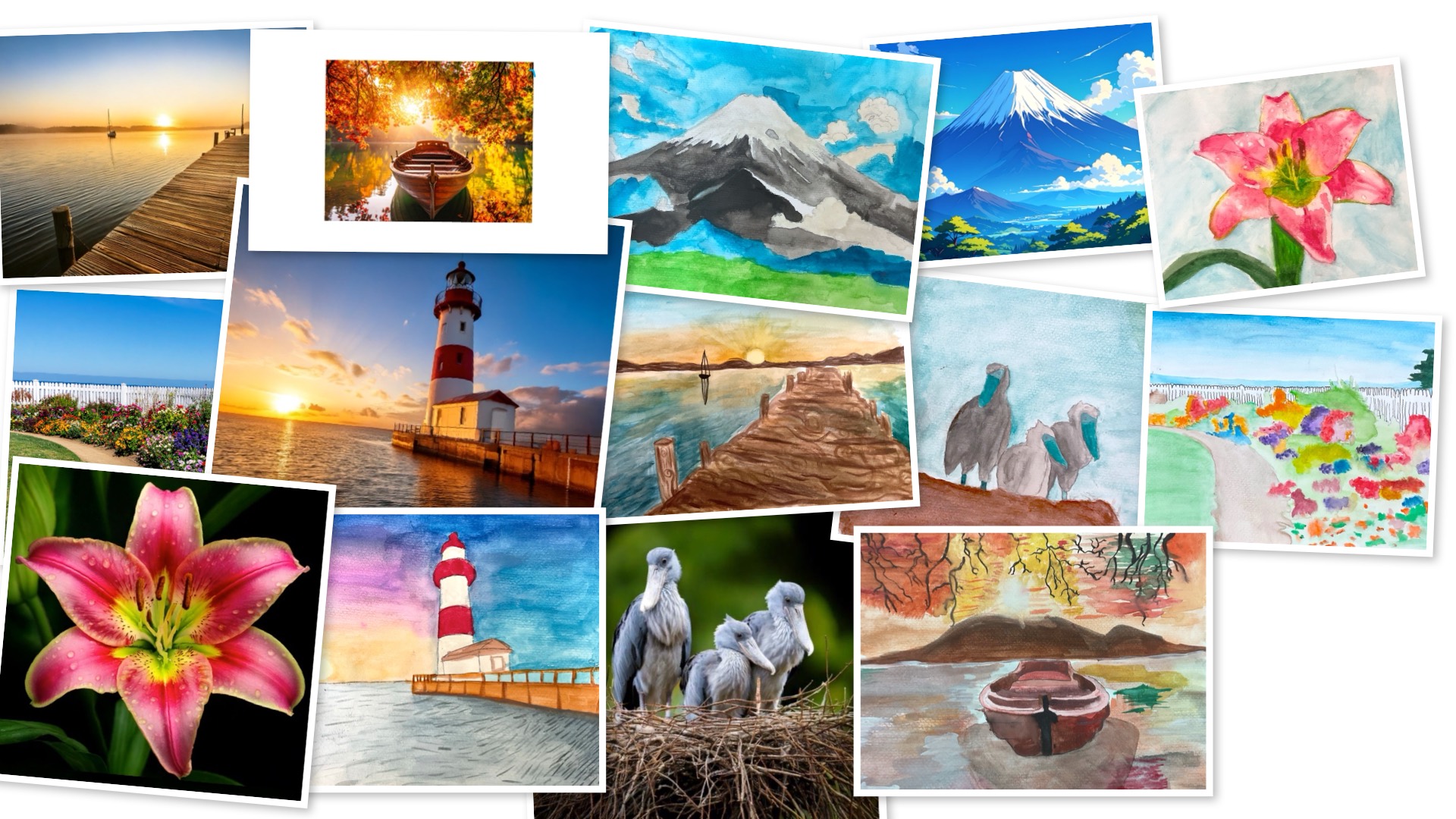
In the Middle School, Art & Design Teacher Lydia Scrivanich P’27, who led an “AI for Image Creation” session during the Professional Development Day in February, introduced the text-to-image generator feature in the Adobe Firefly web-based app to her seventh-grade Studio Art classes.
One lesson involved using an AI image as inspiration for a watercolor painting. Students were tasked with typing in a prompt with descriptive language to create such things as a flower, bird, or landscape scene. An example might be “a lake house in the winter with a cool color scheme.”
In this way, students do not simply copy an image, they envision what they want to paint. “They learned how to be more thoughtful users of AI, and they understood how specificity is important,” said Ms. Scrivanich.
As part of these lessons, Ms. Scrivanich covered what good digital citizenship entails as well as the ethics and appropriate use of AI. Students use Seesaw, an online journal, to post work in progress and note any AI tools they’ve used. “They have to explain what they had to do to arrive at their product,” said Ms. Scrivanich. "Having students reflect teaches them how to document their work and present to a team what they have accomplished. These are important skills for students to practice no matter what path they may choose in the future."
“AI isn’t going anywhere,” remarked Ms. Scrivanich. “If our mission is to ‘make it better,’ then we have to be responsive and aware of this technology."
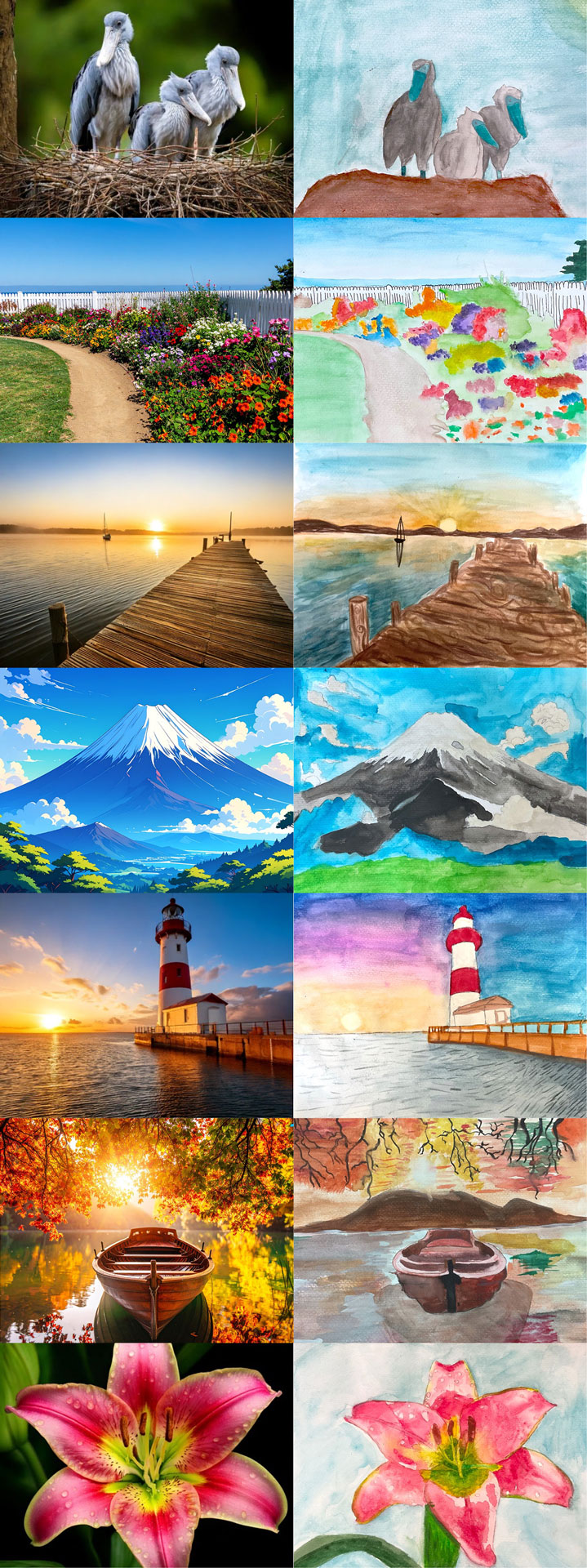
These artwork samples, from seventh grade Middle School students, show both the results of AI-generated images based on thoughtful prompts and the students' final, original results.