
D-E’s Human Development and Student Support Services departments provide our students with a safe space for self-discovery, mental health awareness, and learnings that go beyond academics.
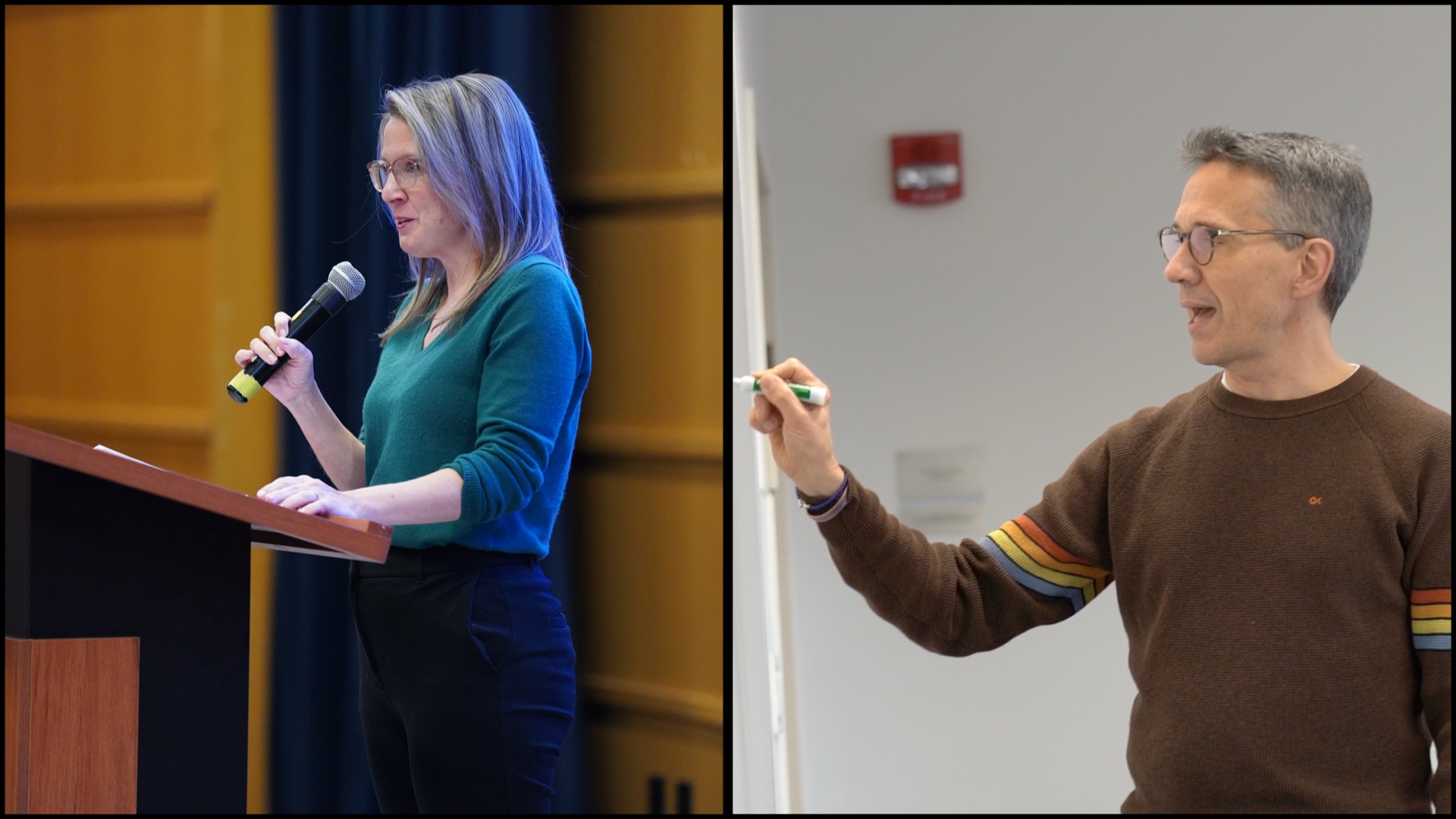
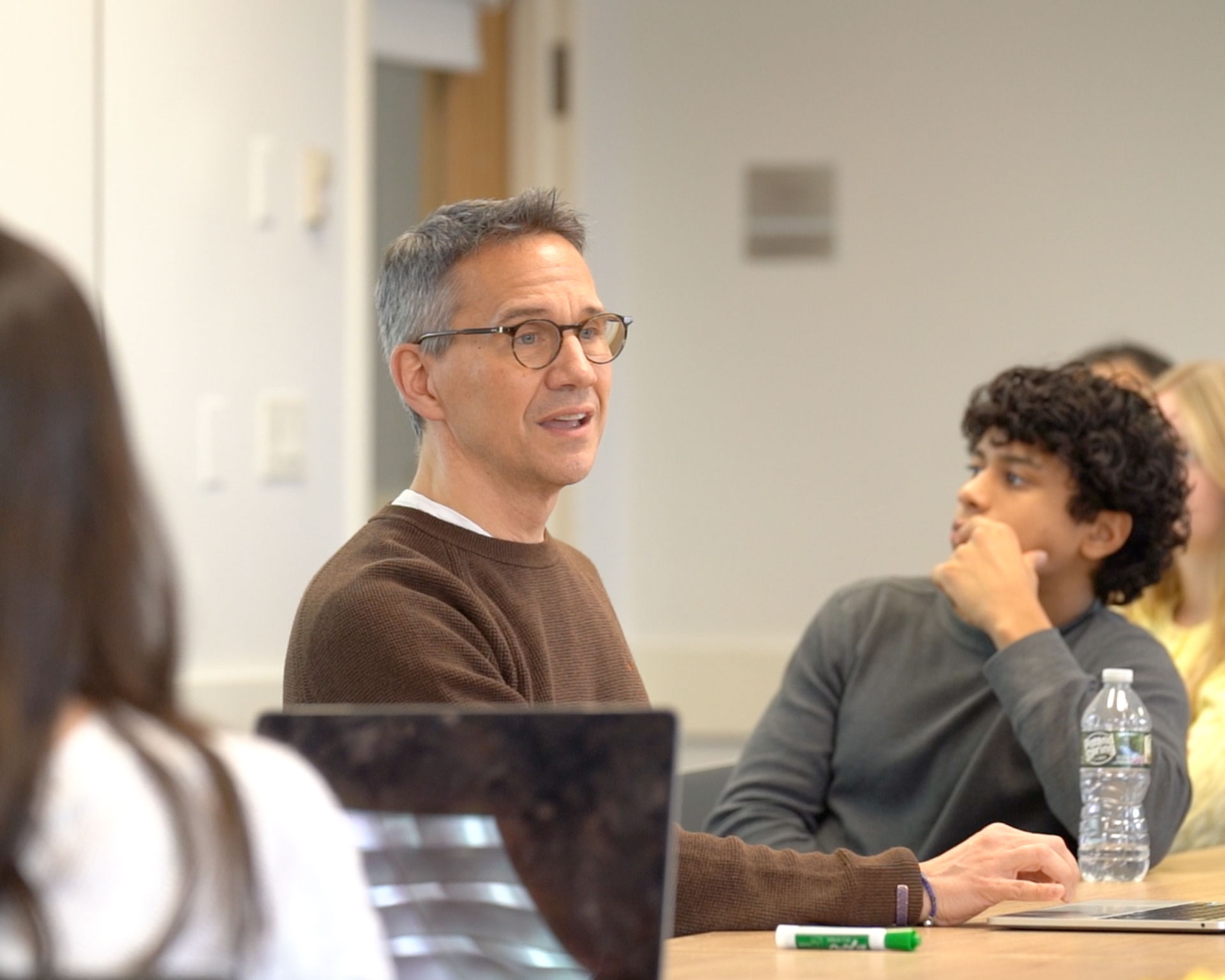
In addition to leading the department, Human Development Chair Dr. Daniel Carragher (aka “Dr. C”) P’26, in his 15th year at D-E, teaches AP Psychology and is a licensed clinical psychologist who practices outside of the School.
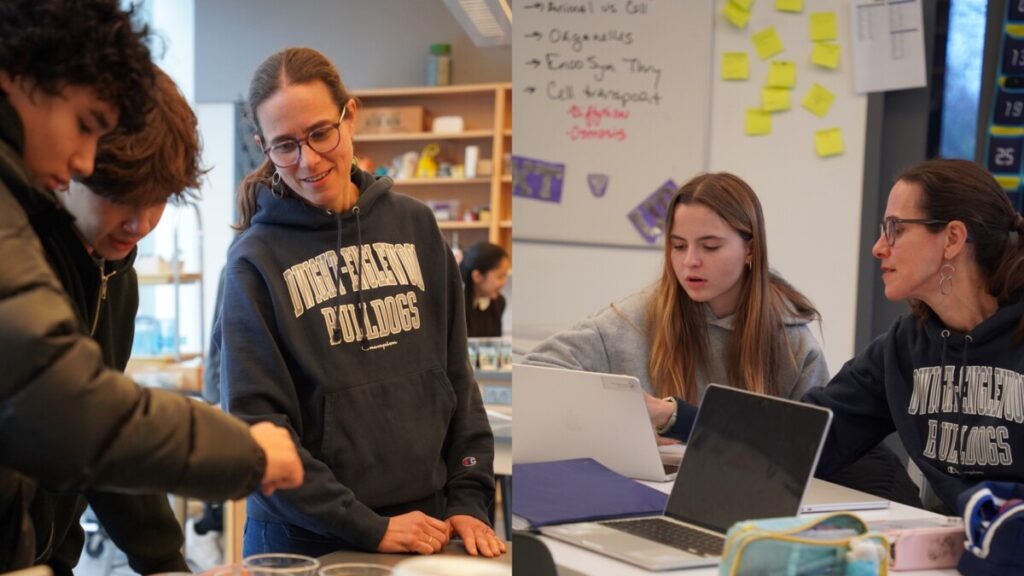
Dr. Deirdre O’Malley, Psy.D., Director of Counseling Services, D-E Student Support Services, who is also in her 15th year at D-E, serves as the Upper School Psychologist and facilitates seminar classes in the Human Development Department. Student Support Services includes psychologists assigned to each division, as well as school nurses, and learning specialists.
Marc Gladstone, Lead Learning Specialist in the Upper School and a faculty advisor for the Nerodivergent Affinity student group, said he enjoys the dynamic nature of his role. “I work closely with students in one-to-one settings to help them reach their individual learning goals and build effective strategies—and with that comes greater self-confidence and metacognition,” he said.
Read on to learn more about both of these departments—and watch our Human Development & Student Support Services Spotlight video here.
Inclusive Excellence
Upper School students are directly introduced to the Human Development Department through the Ninth Grade Seminar, a mandatory class that explores students’ identities. “We teach skills about how to talk to each other in a respectful way,” explained Dr. C. Topics include individuals’ social identities, gender, race, sexual orientation, and socio-economic status.
“I think our Ninth Grade Seminar really sets kids up to have those tough conversations, to be in community in a way that is much healthier and more productive for everybody,” said Dr. O’Malley, who created the 10th Grade Seminar, which further delves into students’ identities through the lens of mental wellness.
“All this understanding about your own brain… and your identity, that can start as young as preschool”
It serves our students well to begin these conversations as early as possible. “All this understanding about your own brain… and your identity, that can start as young as preschool,” said Dr. O’Malley. “I think a really nice thing about working at this school is, you can see how those skills build over time.”
Concurred Dr. C, “We’ve heard from other teachers in other departments that they no longer have to explain in 11th grade and in English class what intersectionality means because we’ve taught them in the Ninth Grade Seminar that, for example, if you’re a black woman, you’re dealing with not only racism, but also potentially sexism, so it’s planting a seed early about all the multiple identities that our students walk around with.”
“You’re going to explore that given your multiple identities how do you see the world, and given those identities how does the world see you?” he added.
In terms of nurturing inclusion and belonging in the classroom, Dr. C noted that “the teachers in the department are experts in knowing who’s in the room and knowing the types of conversations that we want to have, the types of conversations that the students are having, and how to navigate all the sort of identities that are there to get our points across, but also make everyone feel safe.”
“Having these conversations lets them realize that high school is going to be a place where they can find their people and they can have conversations with others who aren’t necessarily like them,” said Dr. C.
Mr. Gladstone said through his experience with the Student Support Team, he feels a sense of belonging is fostered by “building authentic relationships with students and families, affirming student identities and experiences, and creating safe spaces for learning and self-advocacy.”
“We uphold dignity by pairing high expectations with appropriate supports, and we strengthen inclusion through proactive skill-building and collaboration with faculty to better meet the diverse learning needs of our students in the classroom,” he added.
Whole-Souled Citizens
Understanding and appreciating one another’s identities aligns well with the concept of fostering whole-souled citizens. “It’s allowing people to really be authentic,” remarked Dr. C.
He pointed to the 10th Grade Seminar as one way we achieve this mission. Everyone who teaches the class is either a licensed psychologist or a licensed social worker. It was formed after the Human Development Department received feedback that students were unable to name their emotions and unaware of the prevalence of mood disorders and anxiety.
“I think it is essential that we always be thinking about the whole child, about teaching the child not only intellectually, but also socially and emotionally and morally and ethically. Because that’s how we function, right? And that’s also how we learn,” said Dr. O’Malley.
For example, gratitude practices are a part of the mental health classes. Dr. O’Malley explained, “We might stop and say, let’s think about all of the people that made it so that we could be in this room right now… the people who had to cut down the trees [to construct the building] and the truck drivers and the construction workers… And this concept is that none of us stand alone… we all are part of a community… we all rely on each other. I think sometimes we can lose track of that.”
The job of the Human Development Department includes “teaching the kids that school is more than just reading, writing, and arithmetic,” said Dr. C. “It’s about a place where you can be your full self. And my department is one of the places where students really feel like they can [be their authentic selves].”
Dr. O’Malley noted, “A lot of times we ask kids, what do you want to be when you grow up? [Instead, we should ask], What kind of person do you want to be when you grow up? How do you want to show up in the world? What’s going to make you resilient and thrive and not just follow a path that you might feel has been laid out for you?”
The department also runs Peer Mentoring programs, in which 11th and 12th graders help mentor students in Middle School and 9th grade. So younger students at D-E can see that support comes in all different forms.
“High school should be a time of exploration rather than premature specialization,” noted Mr. Gladstone. “This is an ideal time to experiment—audition for a play, try a new sport, learn an instrument, or join a club outside one’s current social circle.”
“I feel growth comes from curiosity, humility, and openness to experience,” said Mr. Gladstone. “I also believe in our school’s emphasis on ‘process over product’ and that students benefit from understanding that purpose often develops gradually.”
Reflected Dr. C, “Every year I send out like 100 seniors into the world that I know I’ve at least planted the seed about themselves and how they should treat themselves and others.”
Innovation In Action
Because many other schools do not have classes that focus on human development or mental health, this department at D-E can be considered innovative in itself. “I think it’s a pretty different way of teaching kids and a whole different way of developing a curriculum that’s pretty unique,” said Dr. O’Malley.
Dr. C said some students unfamiliar with the structure might be confused that Human Development classes don’t require students to do homework or take tests, but at some point they come to the realization that, “Oh, this is the place where I just get to exhale… this is the class where I just get to talk about real stuff and how I really feel.”
In her seminar, Dr. O’Malley said, “We talk about what mental health is, how our brains work, how our brains develop, how our neurotransmitters are responsible for all our thoughts and emotions… And then we practice all these evidence-based strategies about improving our mental health.”
“So we do meditation and mindfulness and cognitive restructuring,” she added. “We also talk about all this research around positive psychology… what makes us the healthiest, happiest people that really thrive and people who do innovate.”
“One thing we really emphasize in our mental health class is that social connection is the key to so much. It’s the key to innovation. It’s the key to mental health,” said Dr. O’Malley.
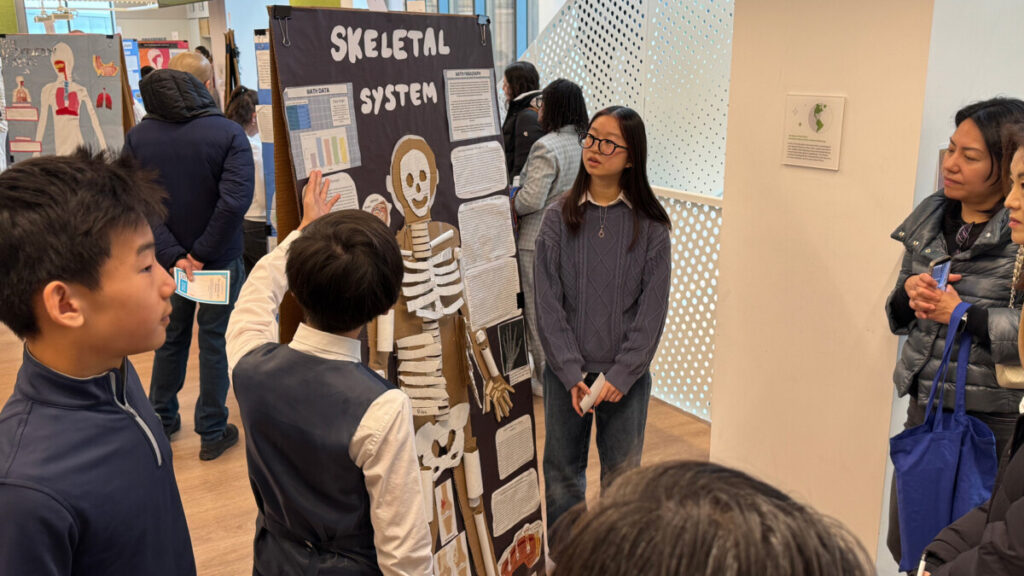
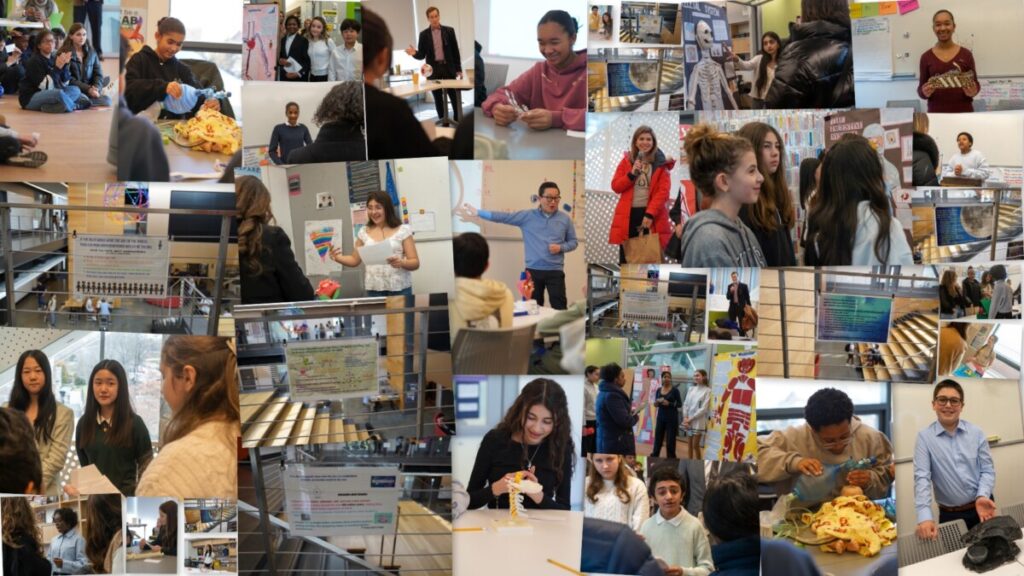
Students are also encouraged to do their own field research. Dr. C advises the Psych-D-E student organization, which annually conducts a psychology experiment driven by student volunteers. For example, last year’s experiment was based on the phantom limb theory, the sensation and perception of amputees that their missing limb is still attached.
Student volunteers sat at a desk with a gloved rubber hand tucked into one of their sleeves to resemble their actual hand. Data collectors then logged the level of pain the volunteers felt after the interactors lightly stroked, poked, slapped, and then dropped a book on the fake hand. In a demonstration of mind over matter, several students reported they actually felt the pain from the book drop. Dr. C said this year’s experiment will focus on the idea of conformity.
“By helping kids reflect on how their own brains work and about who we are as humans, I think then they become more self-reflective,” said Dr. O’Malley. They can have a better understanding of why they act the way they act, why they make decisions that they do. And then they can feel more confident in how they show up and how they want to be in community.”