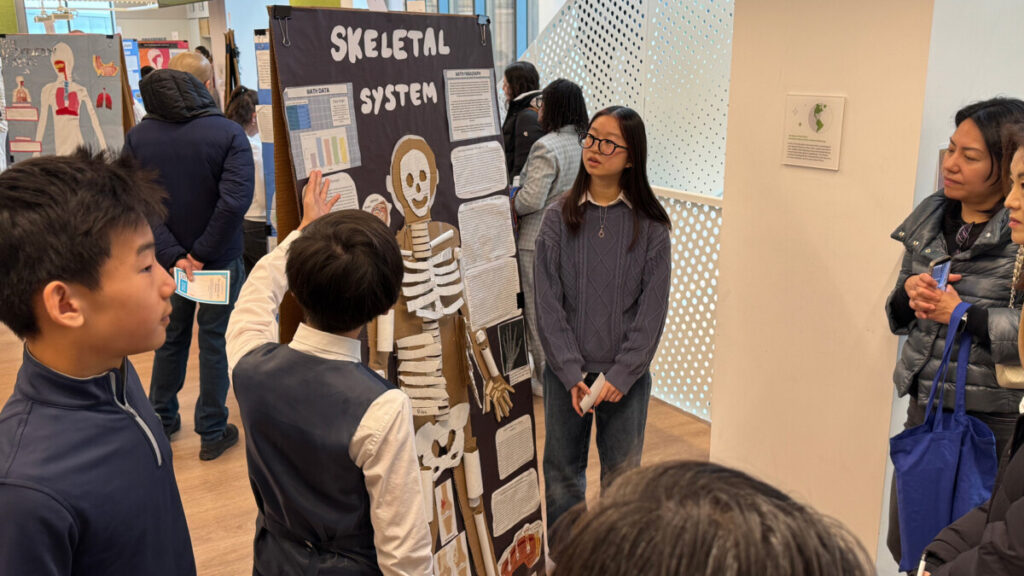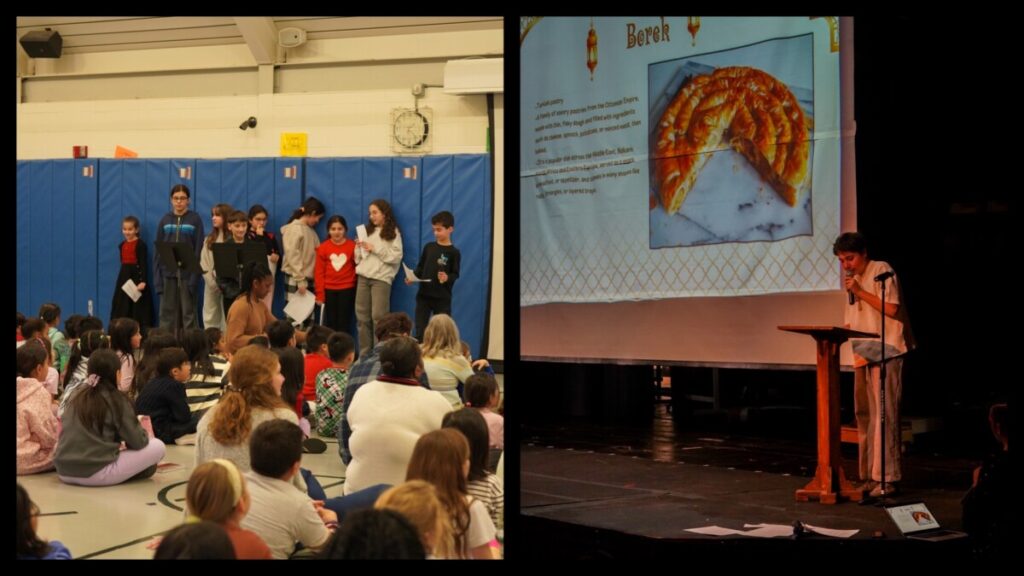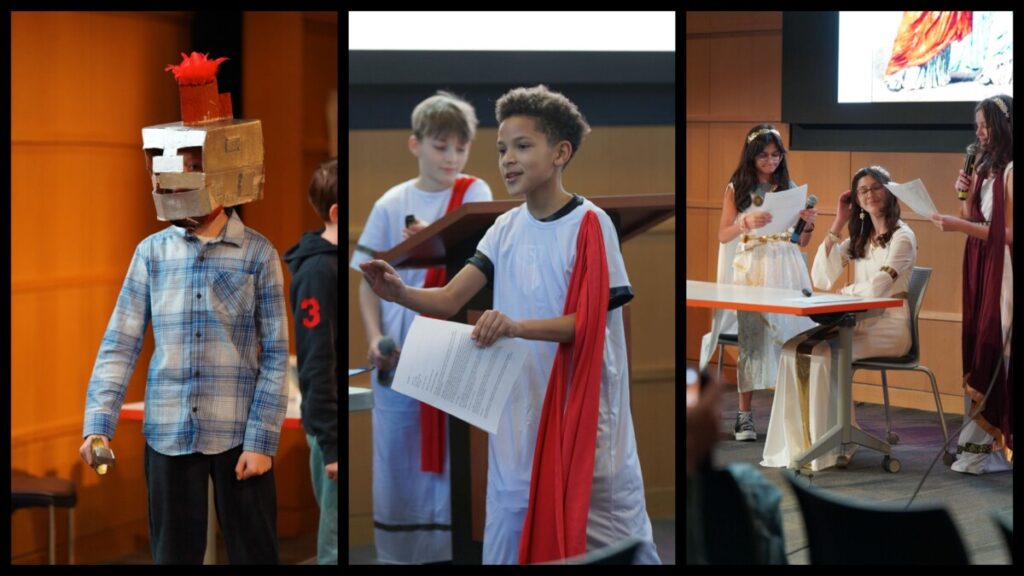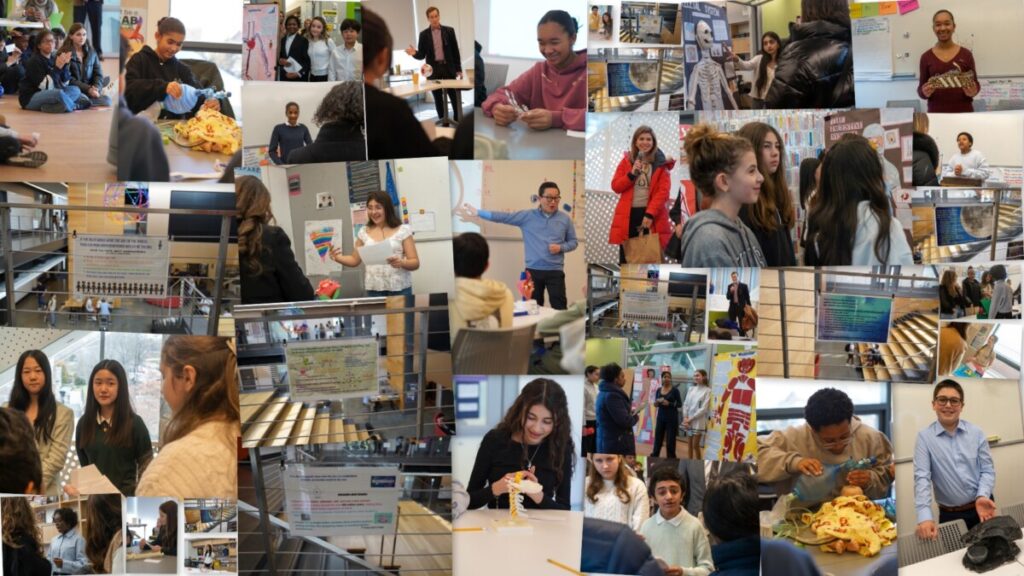
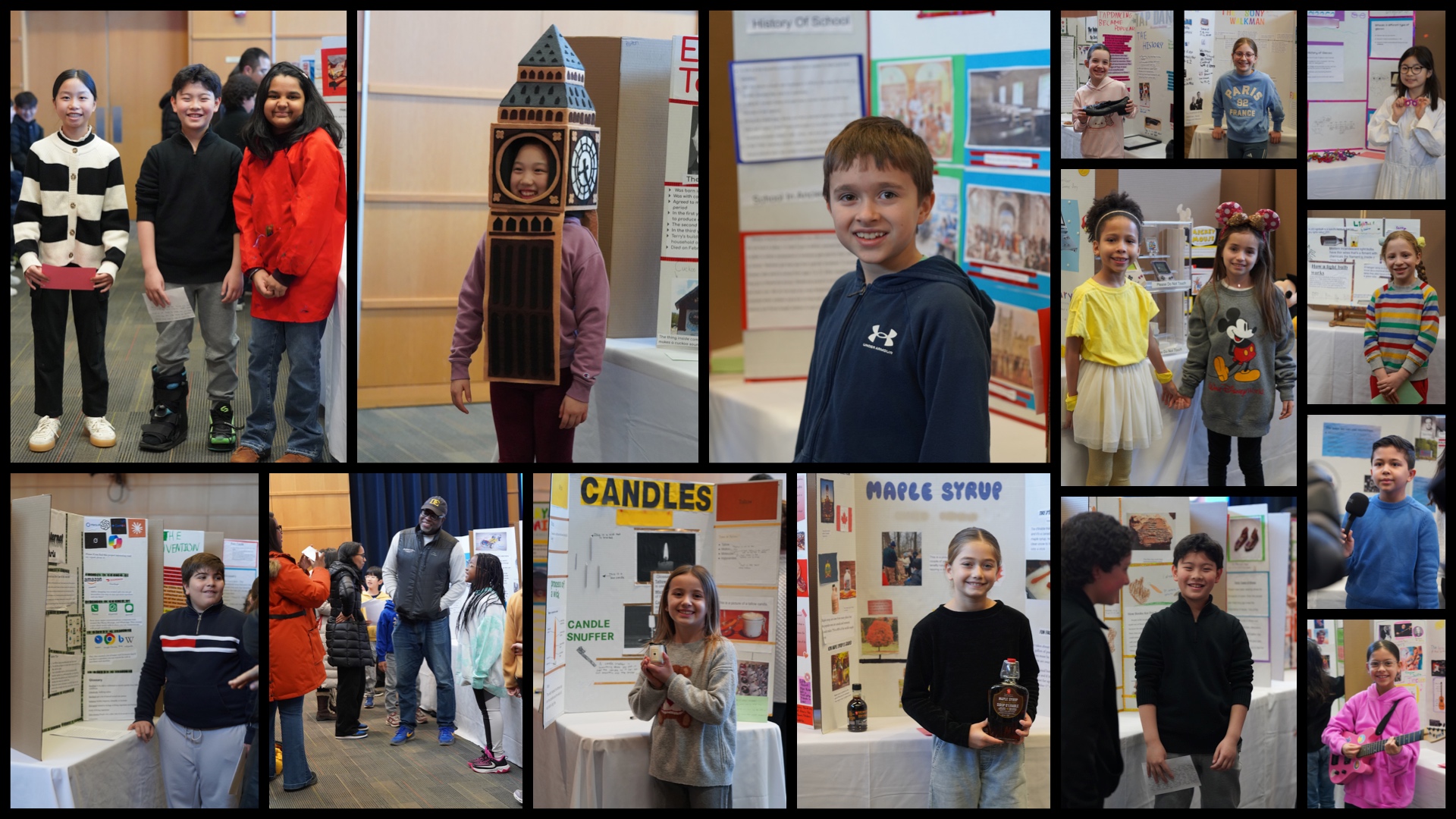
As part of a nonfiction writing unit, fourth graders in Ms. Watson’s class explored the research and writing process by studying an invention of their choice and developing a well-structured five-paragraph essay. “They began by generating their own subtopics, thoughtfully organizing their ideas around key aspects, such as the inventor’s background, the problem the invention solved, how it works, and its impact on society,” said Ms. Watson. Students presented their work on a wide range of topics.
Diego H. ’34, for example, covered the evolution of telephones and was able to articulate how telephones changed the world. Mia G. ’34 said she researched the Sony Walkman because “I was curious how people listened to music before iPhones and iPads.” Liana G. ’34 said she was interested in the topic of tap dancing because she’d recently begun taking lessons and then “learned the whole story behind it.” Alexis K. ’34 fully committed to her chosen invention of clocks by wearing a clock tower costume and presenting on the most primitive sundial clocks to the highly precise atomic clocks. Joseph Z. ’34, whose project was focused on cars, said he learned that it was “important to understand what is going on in the world.”
In addition to practicing taking detailed research notes, peer editing and mentoring was an important part of the process, said Ms. Watson. She noted that in a great display of cross-divisional collaboration, her students got presentation tips from eighth graders, who’d recently completed their History Day Fair. “These lessons connect classroom learning to the real world by illustrating how problems inspire innovation and how individual ideas can shape history,” said Ms. Watson. Bravo to our future innovators for all their hard work!