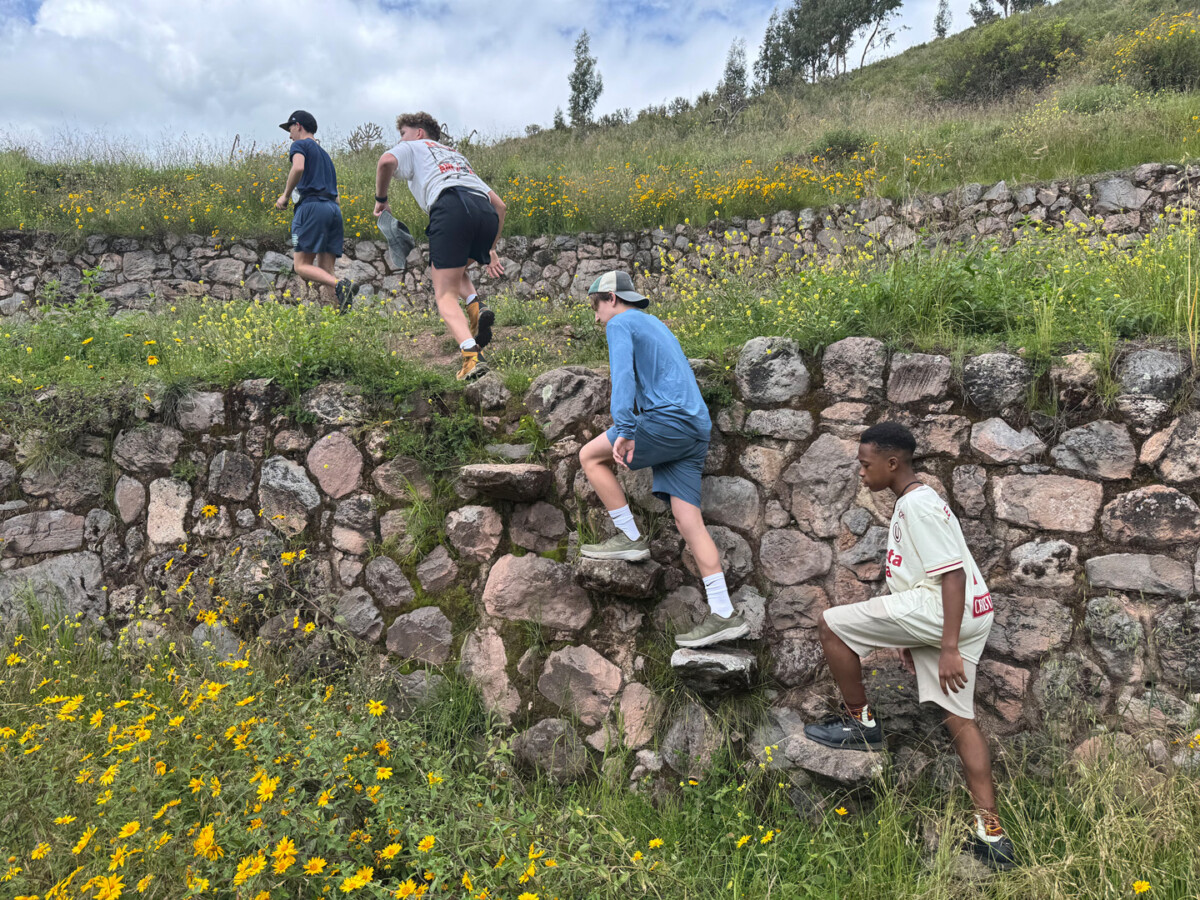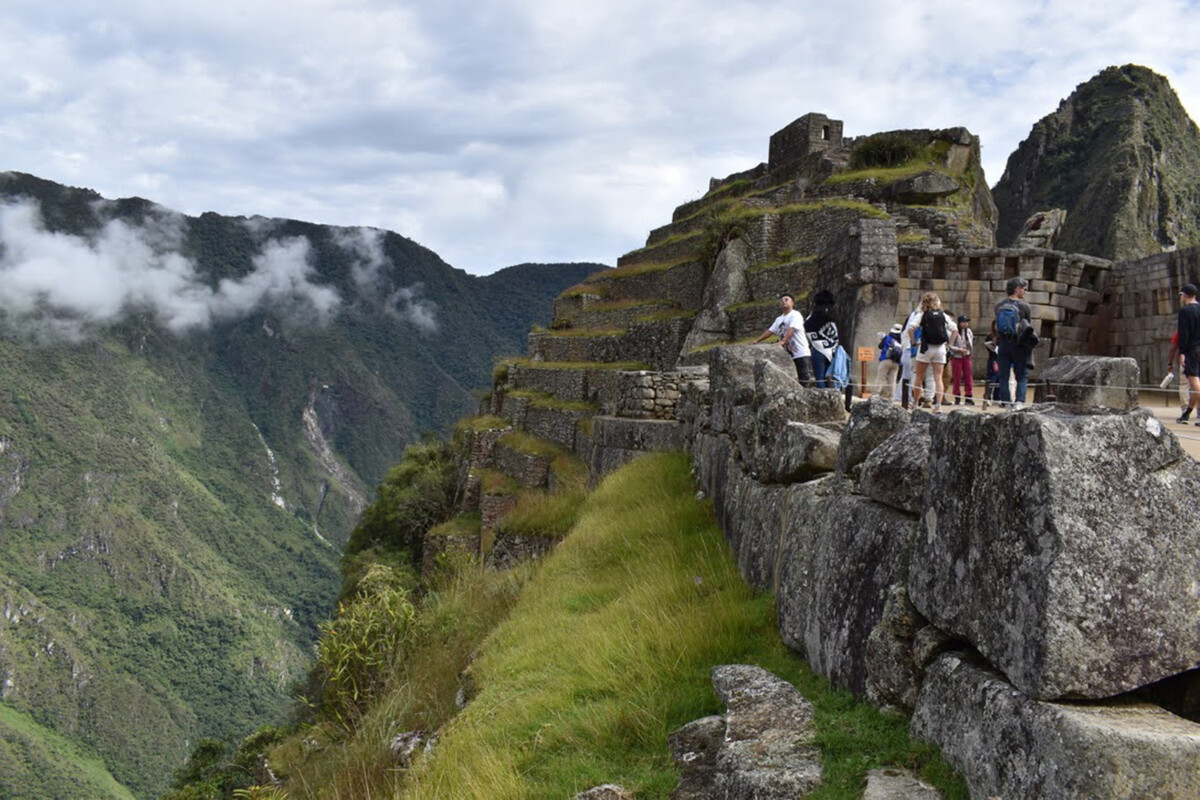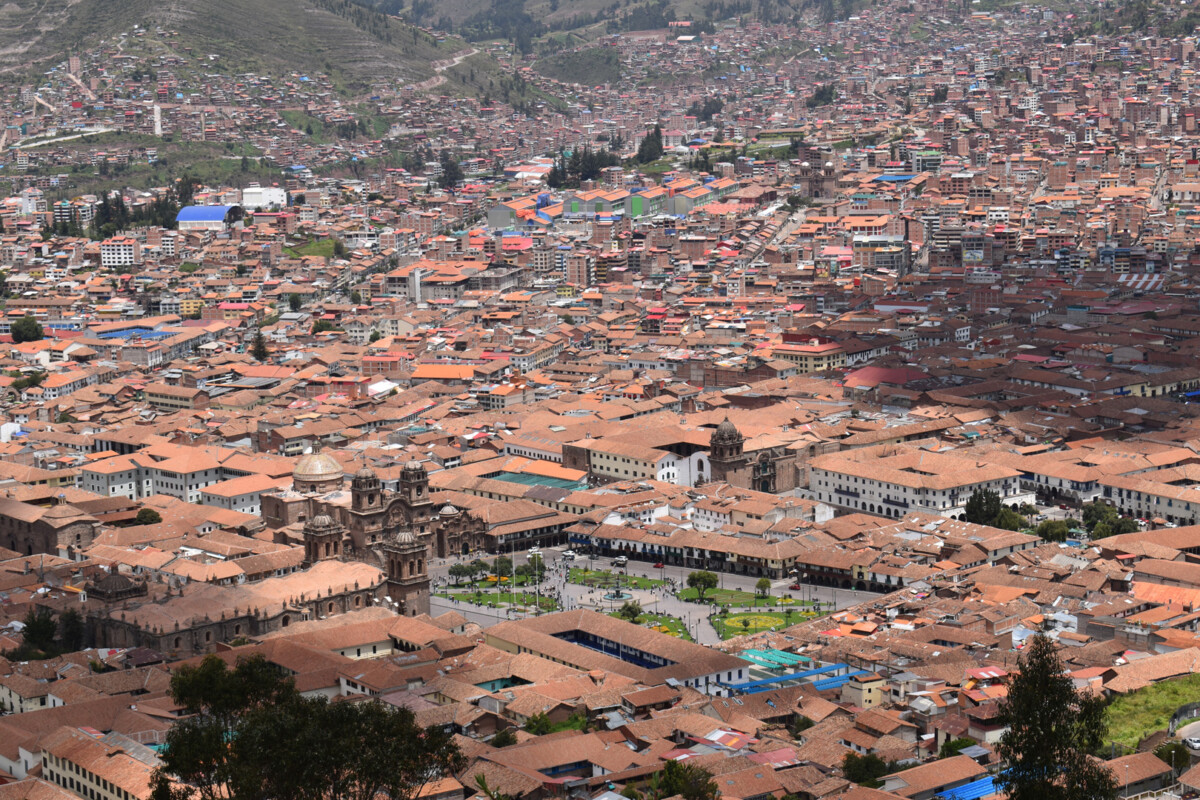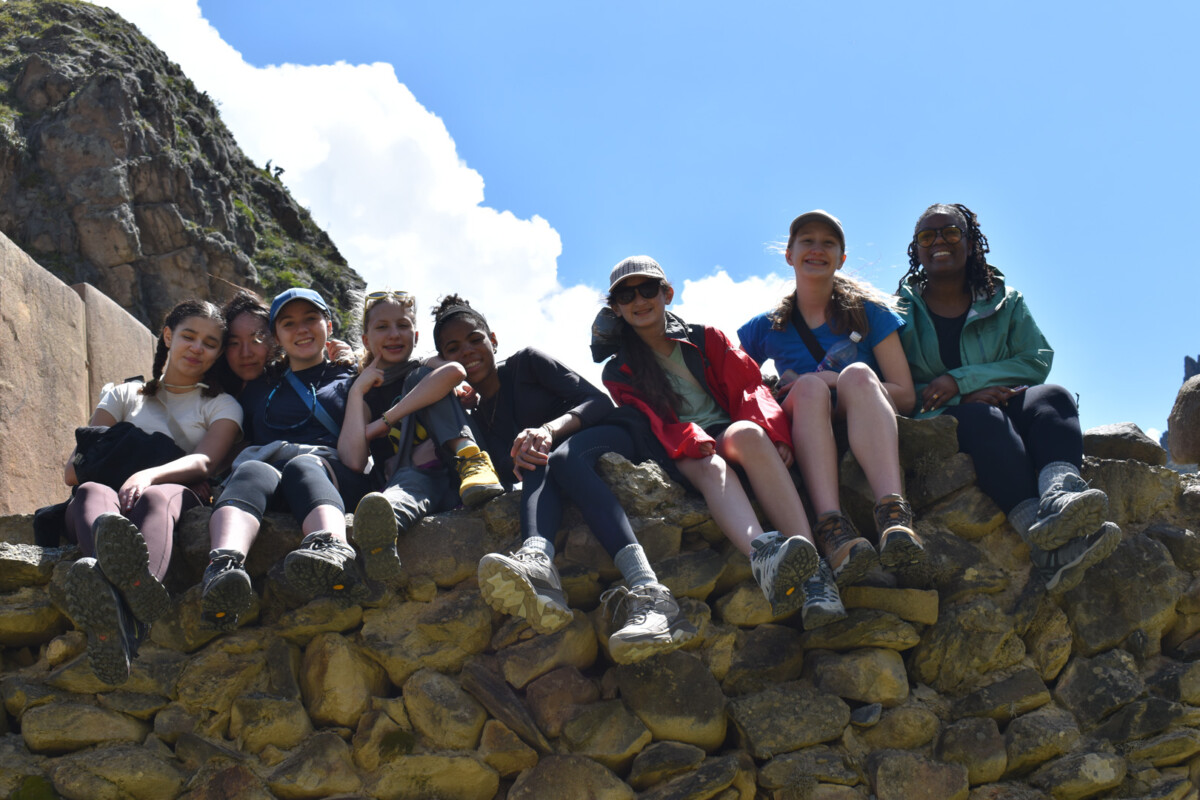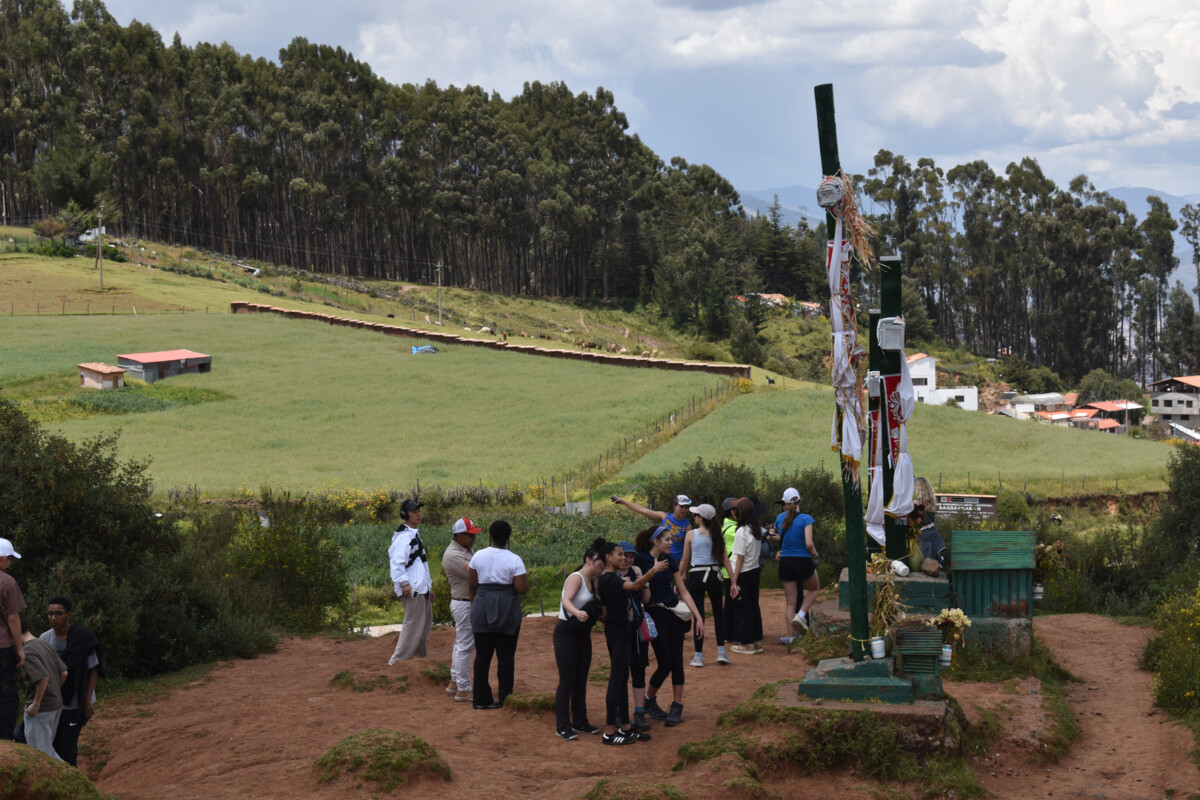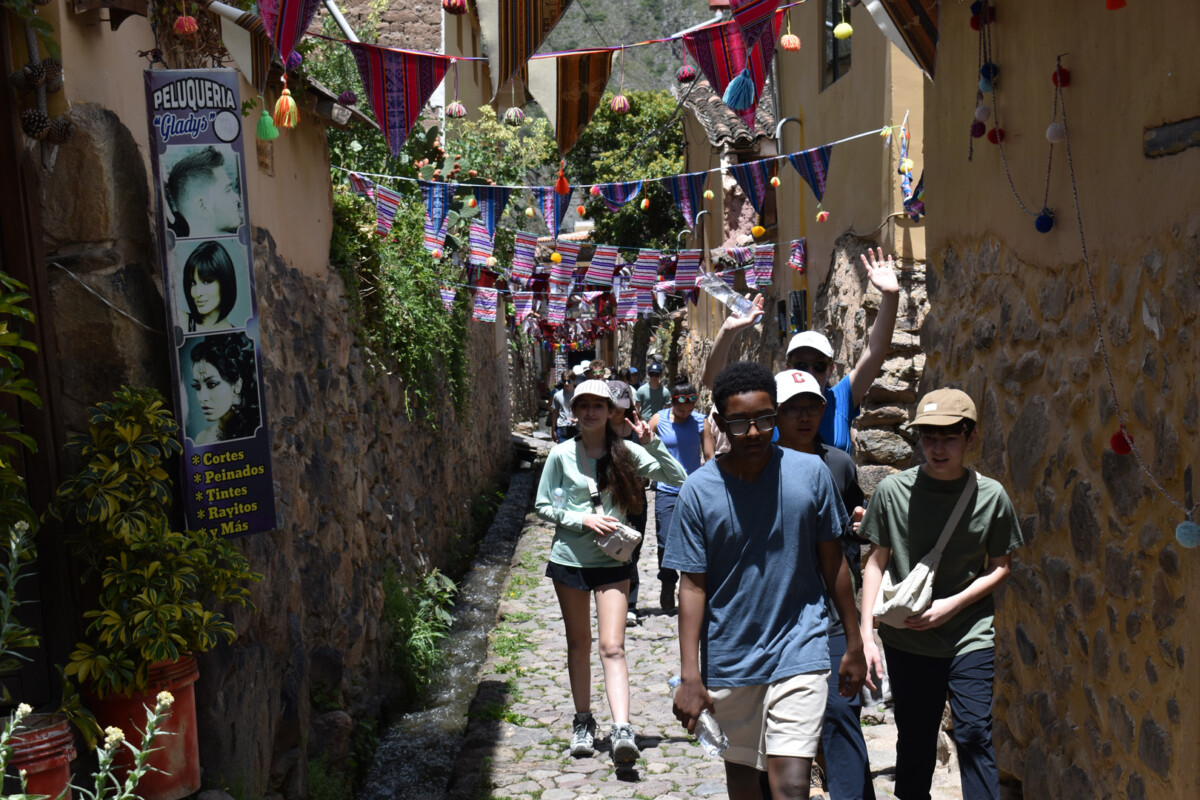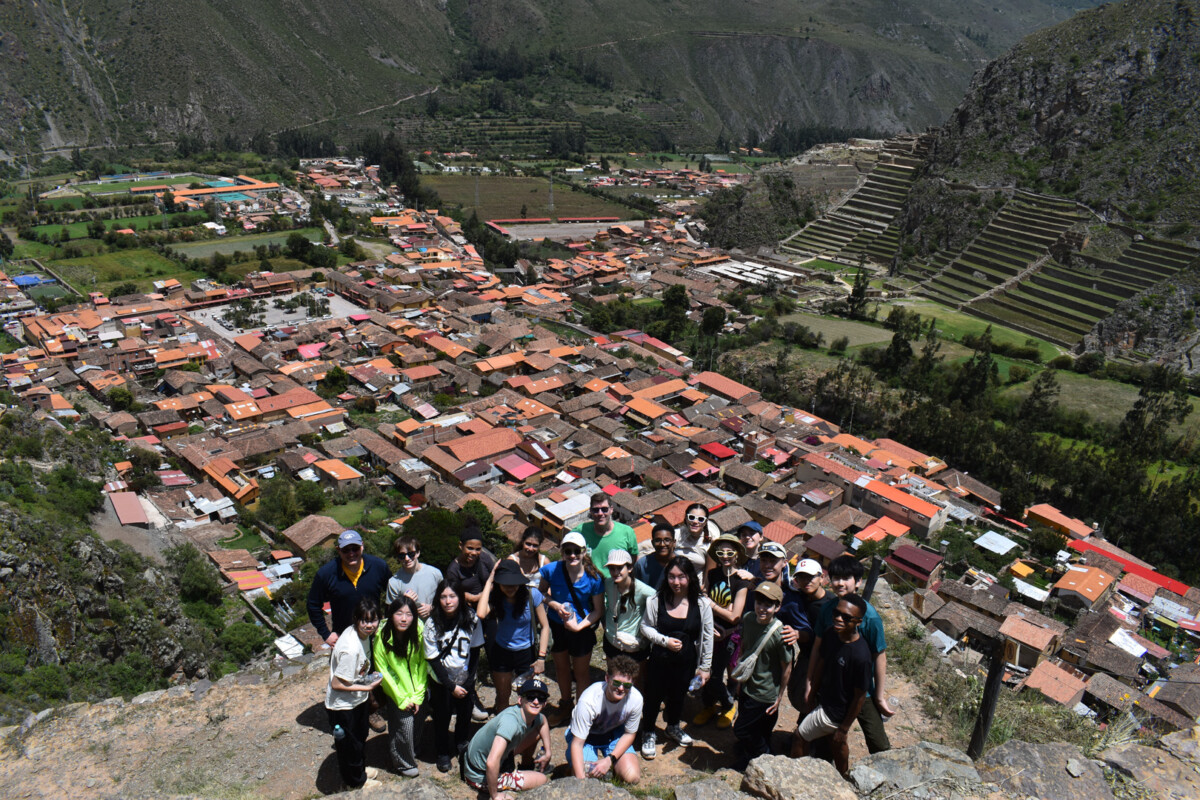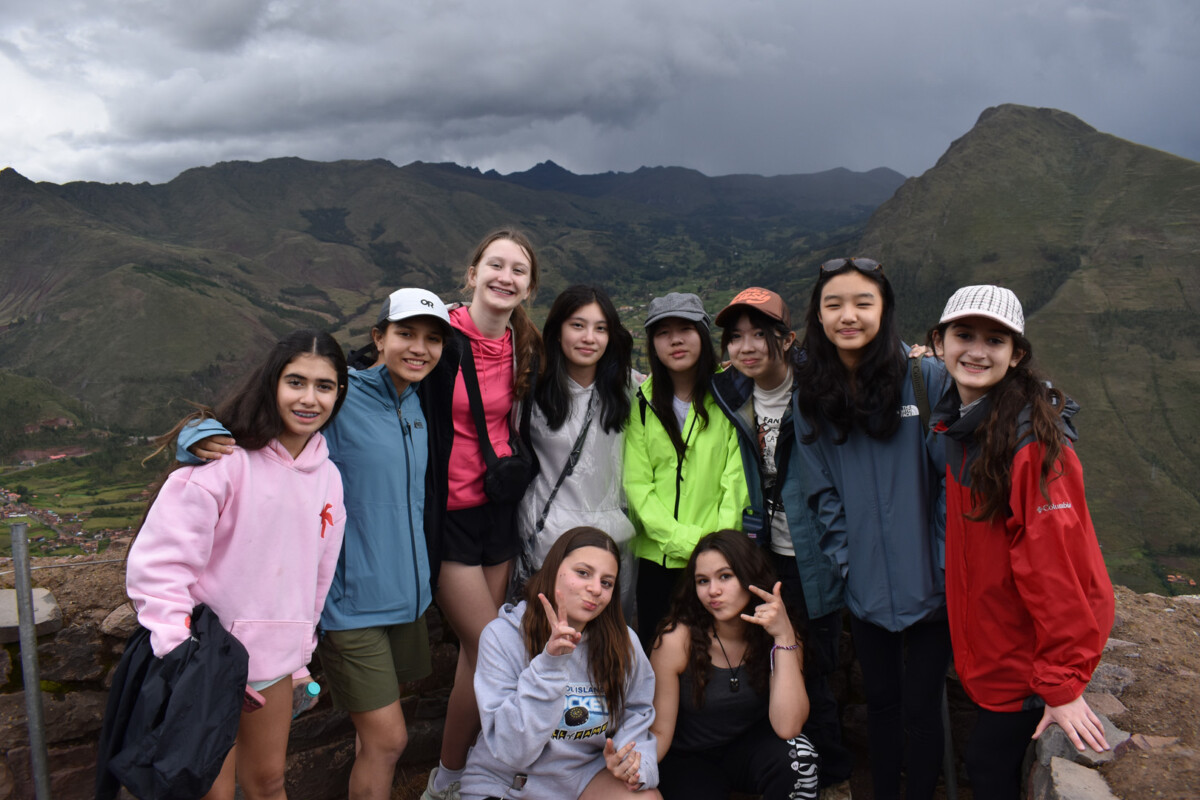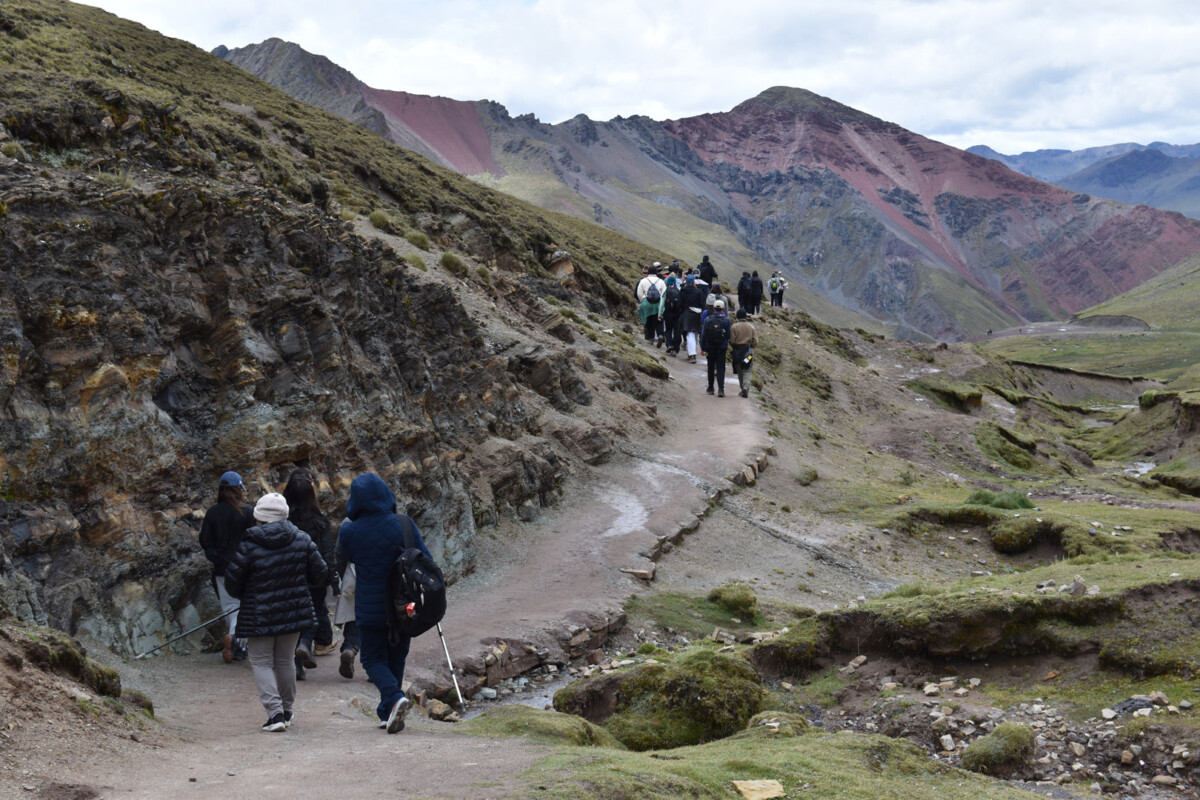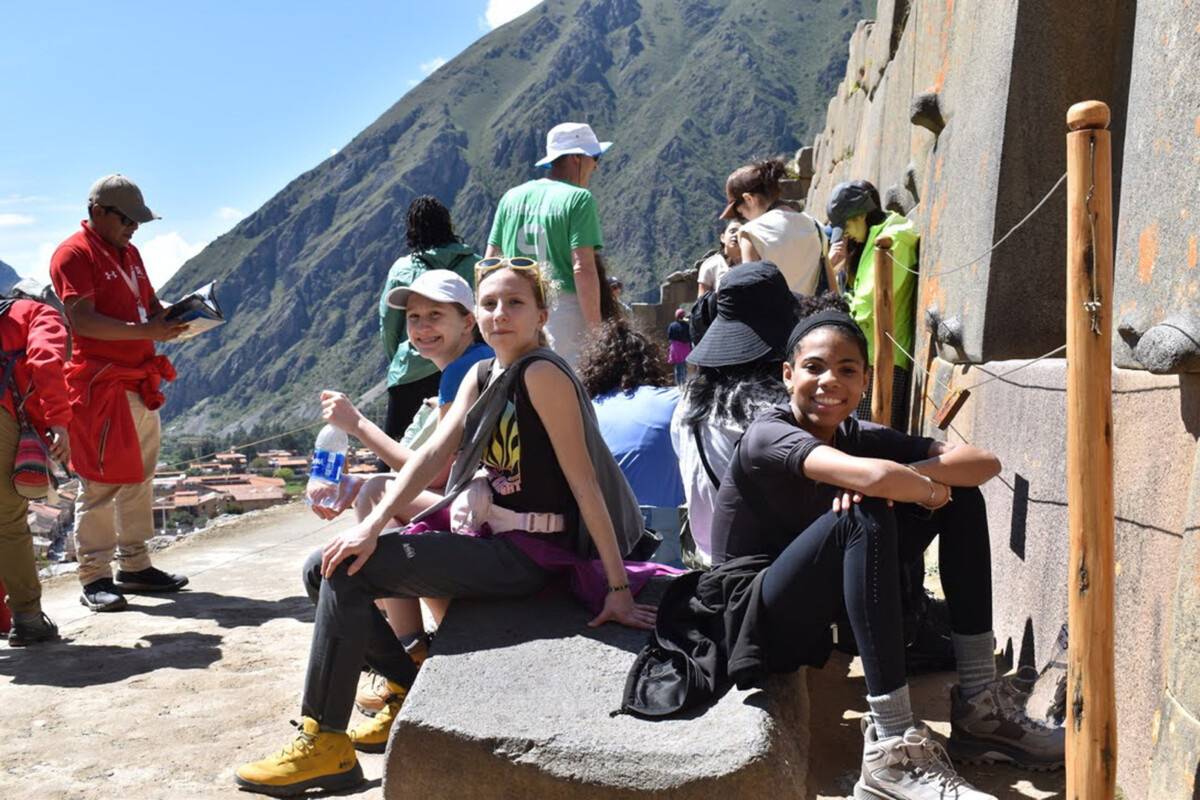

In what has become a tradition for more than 15 years, Middle School (MS) Math and Computer Science Teacher Jonathan Egan led the D-E 360° Eighth Grade Spring Break Trip to Peru. This year, 24 eighth graders, accompanied by Mr. Egan, MS Principal Jonathan Davis, and Eighth Grade English Teacher Amanda Burnett, traveled to the South American country over the first week of break, visiting Cusco, the Sacred Valley of the Incas, Machu Picchu, and Rainbow Mountain.
“Eight full days were spent exploring the Andean countryside, touring famous fortresses, cathedrals, and ancient ruins, and immersing ourselves in the local Indigenous culture of the Andes,” said Mr. Egan.
“Visiting another country with peers and teachers, far removed from family and the many comforts of home, makes for a special experience,” expressed Mr. Egan. “The kids develop greater independence and learn about a part of the world that was otherwise completely unfamiliar to them.”
Furthermore, students learn the historical context of the cultural diversity and assimilation that exists in Peru and other places in the world. “Our students get to see for themselves the Spanish attempts to erase the Incan culture, and the subsequent merger of European, Moorish, and Indigenous cultures in the local art and architecture,” said Mr. Egan. “They begin to make connections to other instances of ethnocide they know of from world history, including those sadly still taking place today. Most of all, they become curious travelers as opposed to tourists.”
The remarkable journey included some physical feats as well. “Our entire group hiked to the top of Huayna Picchu, the tall peak you see sticking up behind Machu Picchu in photographs,” said Mr. Egan. “The trail is a series of steep switchbacks built into the side of the rock and dense, sub-tropical jungle… original Inca stairs, gruelingly narrow and steep… must be climbed towards the top. Though the hike is safe, near-vertical drops to the valleys below can make the ascent feel rather scary at points.”
As students reached the summit following the hour-long hike, Mr. Egan said there were words of support and congratulations all around.
“Eight full days were spent exploring the Andean countryside, touring famous fortresses, cathedrals, and ancient ruins, and immersing ourselves in the local Indigenous culture of the Andes,” said Mr. Egan.
Another experience was a visit to El Centro de Textiles del Cusco in Chinchero, a town located high in the Andean plains, where female weavers demonstrated their work, and students were invited to take part in spinning the alpaca and llama wool and using natural methods to dye the textiles.
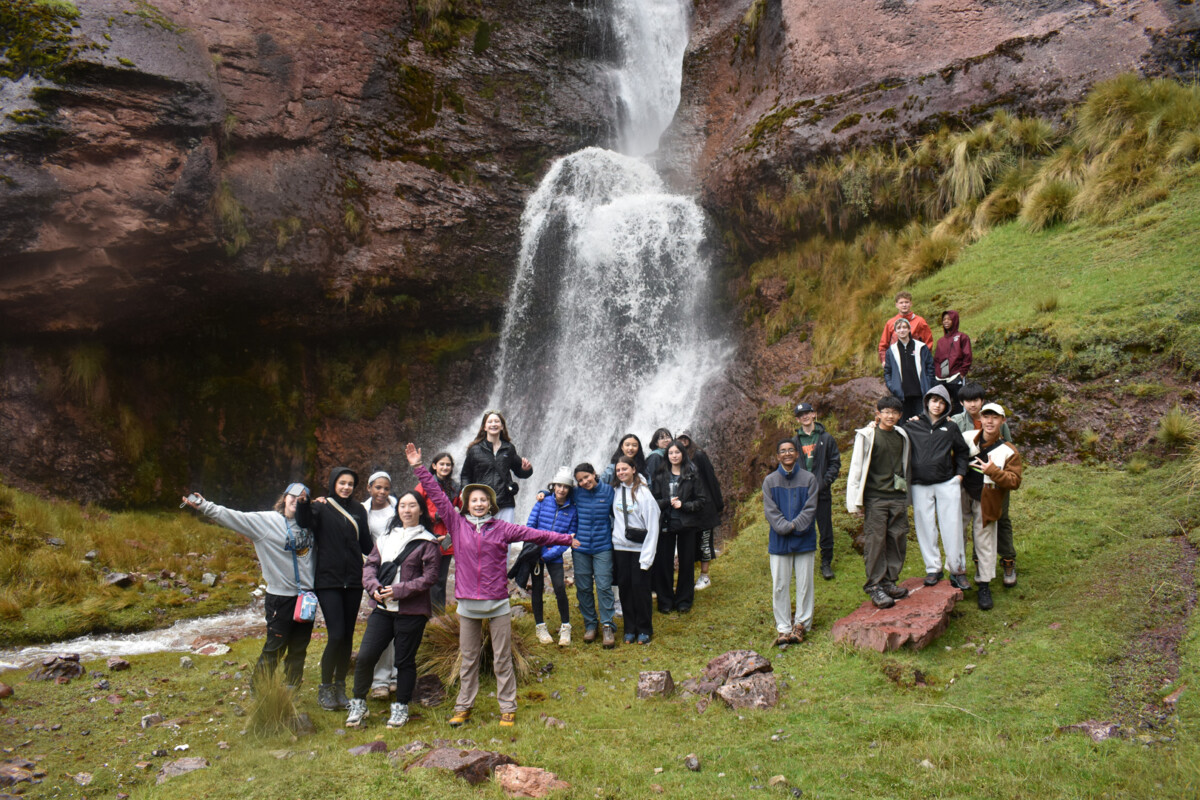
Toward the end of the trip, the group went camping near Rainbow Mountain and the Ausangate glacier. “What might have seemed improbable and even uncomfortable for students to think about just one week prior became yet another adventure to embark on,” said Mr. Egan. “There were hikes, a large waterfall, a soccer match, a giant game of manhunt played in the dark, and a group campfire with many interesting and scary stories. And of course, no cell service.”
After running the trips to South America for over a decade, Mr. Egan has observed that each group of 8th graders develops their own identity. “This year’s intrepid group of 24 students was our largest yet, and they will be remembered for their engagement in learning about the history behind the Inca ruins and surviving Spanish colonial churches, collective willingness to push themselves on physical hikes at high altitudes, bravery in camping for the first time—in the Andes Mountains, no less—and bold eagerness to try all kinds of new foods including alpaca and cuy, or guinea pig, both traditional Andean dishes,” remarked Mr. Egan.
My biggest takeaway from this trip was trying new things, just like traveling with friends as a first,” said Matthew Ryoo ’30. “Yet I’m so happy that I took that risk, because the biggest risk is the biggest reward.”
“The reward,” Matthew added, “was trying new foods, [making] new friends, new experiences… the biggest moments on this trip were the smallest ones, as we spent nights with each other eating dinner and talking about the day and what would come tomorrow.”
For Amélie Marek ’30, the highlights included eating traditional Peruvian food and seeing the Inca houses and Machu Picchu. “The most meaningful part for me was making memories with my friends and teachers that I will cherish forever,” she said. “It felt like I was with my second family.”
Mr. Egan recalled that another student remarked on the bus from the airport back to D-E that they were happy to be home but sad not to be waking up in Peru tomorrow. “That’s when you know a trip was successful,” said Mr. Egan. “Maybe they will return to Peru at some point, or travel to another South American country. More importantly, my hope is they are inspired to continue exploring new places around the globe.”